Retrieving Cloud Sensitivity to Aerosol Using Ship Emissions in Overcast Conditions
Rodrigo Q. C. R. Ribeiro, Edward Gryspeerdt, Maarten van Reeuwijk
Geophysical Research Letters · 2023
Abstract
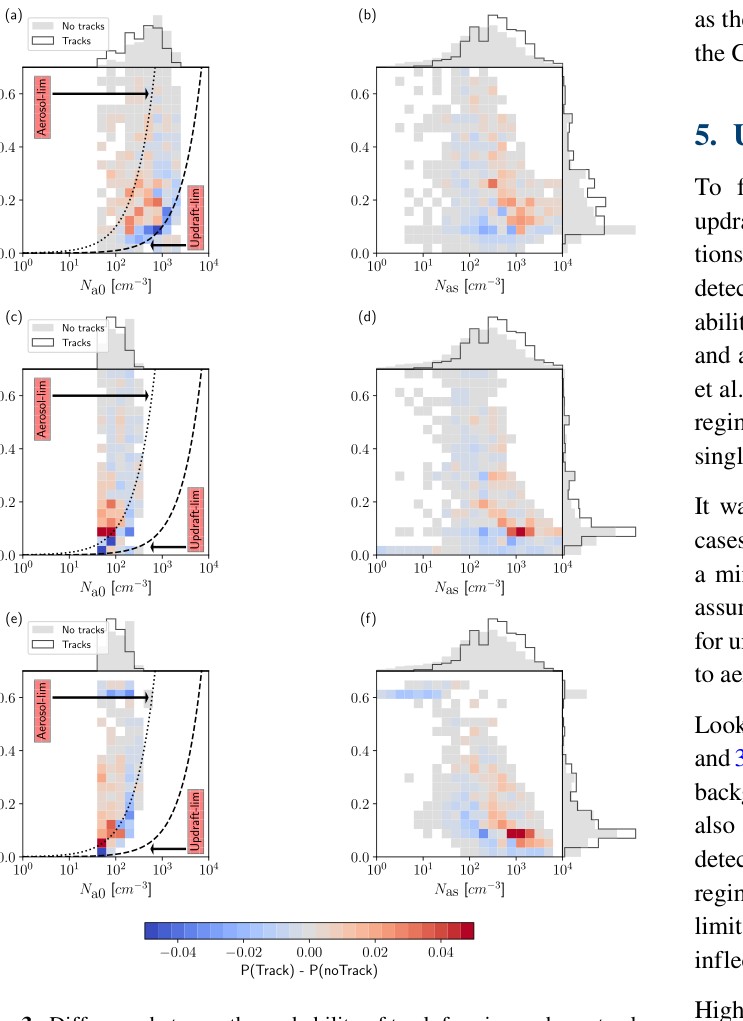
The interaction between aerosols and clouds is one of the major uncertainties in past climate change, affecting the accuracy of future climate projections. Ship tracks, trails left in clouds through the addition of aerosol in the ship exhaust plume, have become a key observational tool for constraining aerosol-cloud interactions. However, many expected tracks remain undetected, presenting a significant gap in current knowledge of aerosol forcing. Here we leverage a plume-parcel model to simulate the impact of aerosol dispersion for 2,957 cases off California's coast on cloud droplet number concentration (CDNC) enhancements. Plume-parcel models show a large sensitivity to updraft uncertainties, which are found to be a primary control on track formation. Using these plume-parcel models, updraft values consistent with observed CDNC enhancements are recovered, suggesting that relying solely on cloud-top radiative cooling may overestimate in-cloud updrafts by around 50%, hence overstating the cloud sensitivity to aerosols. Plain Language Summary Here we investigate the interactions between aerosols and clouds and their impact on climate change. Ship tracks were used to study these interactions, and aerosol emissions from ships were modeled. It was shown that the increase in cloud droplets from ship aerosol was highly sensitive to the speed of the updraft in the clouds. A method was developed to fit the updraft to the observed cloud enhancements; the resultant updrafts were smaller than current estimates, suggesting that the clouds may be less sensitive to aerosols than previously thought. RIBEIRO ET AL. © 2023. The Authors. This is an open access article under the terms of the Creative Commons Attribution License, which permits use, distribution and reproduction in any medium, provided the original work is properly cited. Retrieving Cloud Sensitivity to Aerosol Using Ship Emissions in Overcast Conditions Rodrigo Q. C. R. Ribeiro1 , Edward Gryspeerdt