Imperial College London
Van Reeuwijk Lab
From city streets to cloud edges, we study how turbulence carries heat, particles, and pollutants and how this impacts the environment.
We develop the numerical, theoretical, and data-driven tools needed to study environmental turbulence: DNS and LES, reduced-order models, data assimilation, machine-learning surrogates, and the open-source urban LES code uDALES.
Interactive demos
Run a simulation
We enjoy working with models and the tools around them. The demos below are a taster of the kind of problems we study — runnable in your browser, drawn directly from the lab's research.
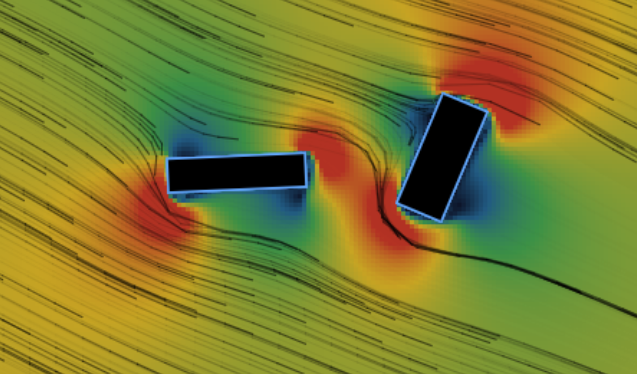
Wind in urban terrain
Place rectangular buildings on a top-down city plan, rotate the wind direction, and watch the particle field show channelling, wakes, and stagnation zones.
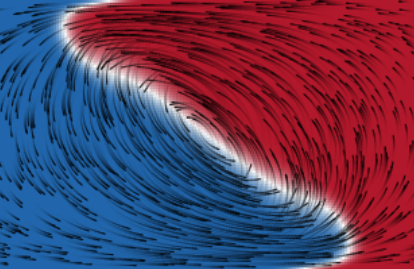
Gravity currents — the lock-release experiment
Pour something dense into something lighter and it doesn't sit still — it races along the bottom in a head-and-tail structure with a remarkably steady speed. Compare the simulated current with a two-layer shallow-water prediction.
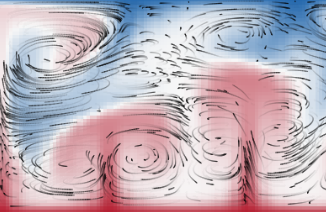
Rayleigh–Bénard convection — patterns from heat
Heat the bottom of a fluid layer, cool the top, and watch patterns emerge. Adjust the Rayleigh number to walk from conduction through cells to soft turbulence.
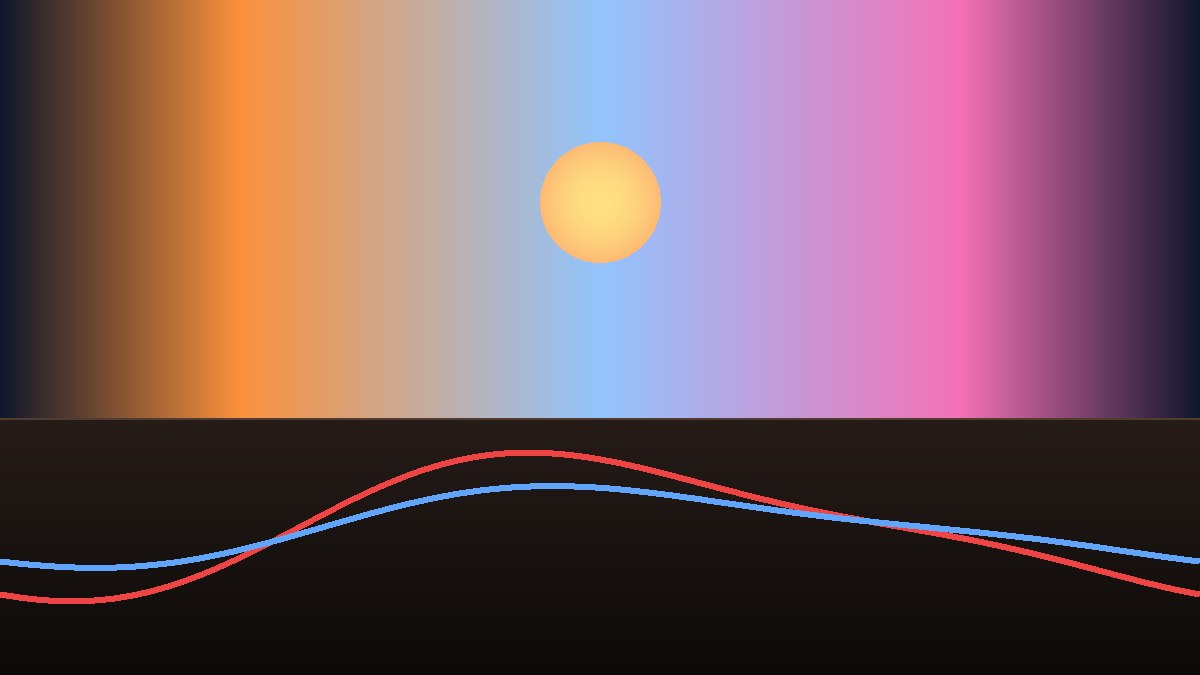
How urban surfaces respond to a diurnal cycle
A 1D surface energy balance running live in the browser — pick a material, change the forcing, watch the heat wave penetrate the wall.
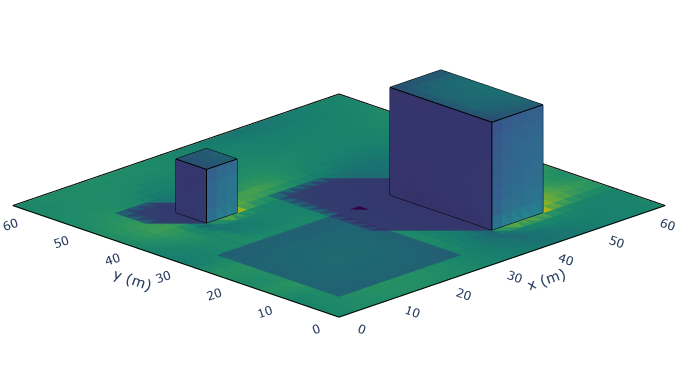
Surface energy balance, face by face
How uDALES resolves the energy budget on every roof, wall and pavement in an urban block — and how we read those outputs with the udbase Python tools.
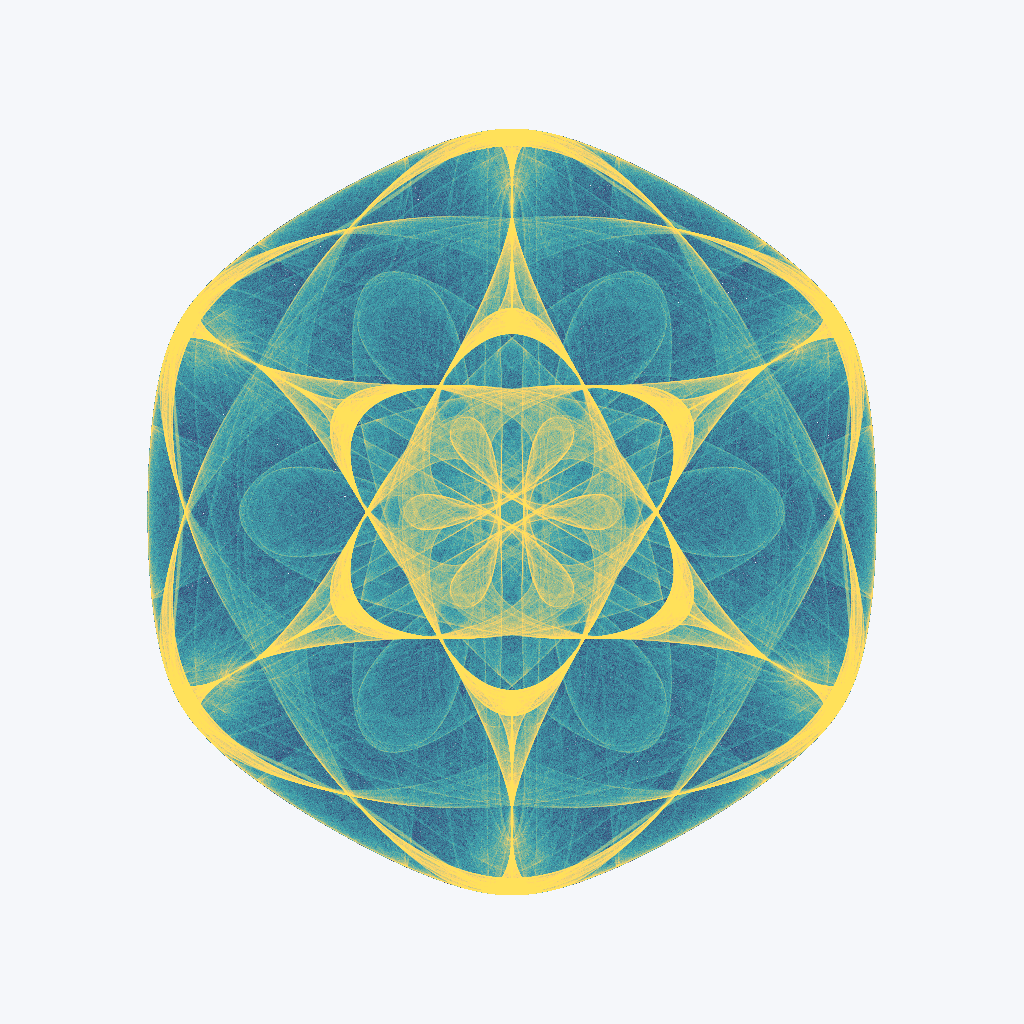
Patterns from chaos — symmetric fractals
A simple complex map iterated millions of times produces intricate, symmetry-respecting patterns — a small window onto the kind of scale-invariant structure that pervades turbulent flows.
Latest research
All →- noodlsoftware GitHub · 2026
- Building drag and shielding in a realistic urban environmentpaper Journal of Wind Engineering and Industrial Aerodynamics · 2026
- Hydrodynamic coupling and retention time of inertial spheres crossing and bouncing at density interfacespaper International Journal of Multiphase Flow · 2026
- Parameter estimation for land-surface models using Neural Physicspaper Geoscientific Model Development · 2026
- Multi‐scale flow analysis for scale‐aware urban canopy modelspaper Quarterly Journal of the Royal Meteorological Society · 2026
Updates
-
- Urban layout affects weather models accuracy21 Sep 2026
As weather models zoom in on our cities, the way we represent buildings and the air flowing around them needs to adapt.
- 🌬️ A great week at WES 2026 –…7 Sep 2026
🌬️ A great week at WES 2026 – the 15th UK Conference on Wind Engineering, hosted by the University of Surrey!
- Urban Fluid Mechanics group heads to WES 20261 Sep 2026
This week, our Urban Fluid Mechanics group at Imperial College London will be heading to the 15th UK Wind Engineering Society Conference (WES 2026) at the University of Surrey.
- Building drag in a real city depends on…28 Aug 2026
We are used to thinking about the aerodynamic drag of a building in terms of its size, shape and orientation.